
Every parent who sets up a fish tank for their kid has the same quiet worry. Will this become another chore nobody wants to do? Between school schedules, sports, and everything else, a tank that demands constant scrubbing, dosing, and troubleshooting rarely survives past the first few months. The good news is that the fish keeping hobby has a genuine shortcut for busy families, and it does not involve cutting corners on tank health.
That shortcut is a living cleanup crew. Instead of relying entirely on filters and manual water changes to keep waste under control, a small population of copepods and ostracods works around the clock in the substrate and plant roots, quietly consuming detritus before it ever becomes a problem. For a family tank, this is close to the ideal setup. It is not a device that can break. It is not a chemical that needs remeasuring. It is a living, self-renewing part of the ecosystem that keeps doing its job with almost no attention.
Most freshwater community tanks, the kind stocked with bettas, guppies, tetras, and corydoras, generate more detritus than people realize. Leftover food, fish waste, and decaying plant matter settle into the substrate and along the base of decorations. Left unmanaged, that buildup drives up nitrates and feeds algae, which is usually when a parent gets a panicked message about cloudy water or a tank that suddenly smells off. A copepod and ostracod culture gets ahead of that buildup instead of reacting to it after the fact.
What makes this approach genuinely low-maintenance is the life cycle of the animals themselves. Once established, copepods and ostracods reproduce continuously in a healthy tank. You are not restocking a cleanup crew every few weeks the way you might with snails that get eaten or shrimp that struggle in certain water conditions. A single well-timed addition can establish a population that sustains itself for months, working the substrate and the root systems of live plants where manual cleaning tools cannot easily reach.
| Weekly Task | Traditional Cleanup Crew | Copepod and Ostracod Culture |
|---|---|---|
| Substrate detritus removal | Manual gravel vacuuming, weekly | Handled continuously by the culture |
| Restocking cleanup animals | Every few weeks as snails or shrimp are lost | Self-sustaining once established |
| Plant root maintenance | Rarely addressed by manual cleaning | Naturally worked by copepods and ostracods |
| Kid involvement | Mostly passive, watching fish swim | Active observation of a visible microecosystem |
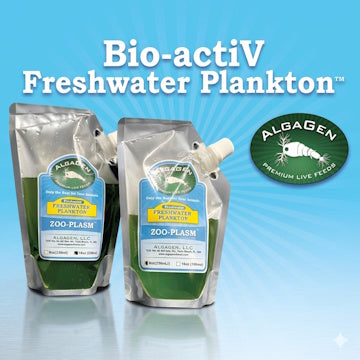
This is exactly the gap that Bio-actiV Freshwater Plankton™ was built to fill. It is a live culture of freshwater copepods and ostracods, added directly to the tank, where the population establishes itself in the substrate and around plant roots. Both organisms are detritivores, meaning their entire job is consuming the biological debris that would otherwise build up and cause water quality problems. A single addition, repeated roughly once a month, is generally enough to maintain a strong, self-renewing population in a typical family tank.
There is an educational bonus here too, and it is one that tends to matter more to kids than parents expect. Copepods and ostracods are visible to the naked eye, especially against a dark substrate, and they move in quick, darting bursts that catch a child's attention far more than a filter ever will. A cheap magnifying glass held up to the glass turns a routine tank check into an actual biology lesson. Watching a living population grow and move through the substrate teaches kids more about aquatic ecosystems than any diagram could, and it happens without a single extra chore added to anyone's schedule.
None of this replaces the fundamentals. A family tank still needs a working filter, a consistent feeding schedule, and periodic water changes. What a live cleanup crew changes is how forgiving the tank becomes when life gets busy. A missed water change or a slightly overfed weekend is far less likely to spiral into an algae bloom or a nitrate spike when copepods and ostracods are already working the substrate in the background. That margin for error is exactly what a lot of family tanks need to actually survive long term, rather than becoming another abandoned hobby in the garage.
Compatibility is another reason this approach works so well for family setups. Freshwater copepods and ostracods are harmless to fish, plants, and the people maintaining the tank, and most common community fish will happily snack on them as a bonus source of natural nutrition. For households with axolotls or fry-raising projects, the same culture doubles as a live food source, giving young or picky eaters something closer to a natural diet than flakes alone can offer.
Timing the first addition matters more than most new tank owners expect. Adding a copepod and ostracod culture to a brand new, uncycled tank rarely goes well, since there is not yet enough established bacteria or detritus to support the population. Waiting until the tank has cycled and been running for a few weeks gives the culture something to actually establish itself around, which leads to a stronger, more self-sustaining population from the very first dose.
It also helps to think about placement rather than just quantity. Pouring the culture near root systems, under driftwood, or into denser substrate areas gives the copepods and ostracods more places to hide from curious fish while the population gets a foothold. Once established, predation from fish becomes far less of a concern, since the population reproduces faster than most community fish can consume it, but that early window is when a little extra care with placement pays off.
Setting up a family tank does not have to mean choosing between a healthy ecosystem and a manageable weekly routine. A live copepod and ostracod culture lets both happen at once. The tank stays cleaner with less manual effort, the water stays more stable between water changes, and the kids get a living, moving reason to actually look forward to checking on their tank instead of walking past it. That combination is what turns a first fish tank into a hobby that actually lasts.
Frequently Asked Questions
How often should I add copepods and ostracods to a family tank?
Once established, a monthly addition is generally enough to maintain a strong, self-sustaining population that continues working the substrate between doses.
Are copepods and ostracods safe for a tank with young kids nearby?
Yes. They are completely harmless to handle or observe, making them a safe, hands-on way for kids to learn about aquatic ecosystems.
Will copepods and ostracods replace the need for water changes?
No. They reduce detritus buildup and add a margin for error, but regular water changes and filtration are still necessary for long-term tank health.
Can copepods and ostracods survive in a tank with live plants?
Yes, and they actually benefit planted tanks specifically, since they work through root systems and substrate that manual cleaning tools cannot easily reach.
Related Reading
Setting Up a Kid-Friendly Aquarium at Home
How to Culture Freshwater Copepods at Home
How to Build a Self-Sustaining Aquarium System


Recent post