
Building a bioactive reef tank from scratch is a fundamentally different project than simply setting up a display and adding fish. A bioactive system treats the tank as a living ecosystem from the very first day, layering in the organisms and food sources that will eventually run much of the tank's nutrient cycling and cleanup on their own. Done right, the result is a reef that feels genuinely alive at every scale, not just the fish and coral you can see at a glance.
The order in which you build this matters more than most new reefers expect. Adding livestock before the foundational biological layers are established leads to a tank that relies entirely on manual intervention and equipment, missing out on the stability that a properly sequenced bioactive build provides.
Start with the physical foundation. Live rock and a deep sand bed or fine aragonite substrate give bioactive organisms the surface area and hiding structure they need to establish themselves. Porous live rock in particular hosts far more surface area for bacteria and microfauna than its visible size suggests, since the internal pore structure of quality live rock is where the majority of biological activity actually happens.
| Build Stage | What Happens | Typical Timeline |
|---|---|---|
| Cycling | Bacterial colonies establish on rock and sand | 4 to 6 weeks |
| Phytoplankton seeding | Water column base established for food web | Ongoing from week 1 |
| Copepod and pod seeding | Microfauna populate rock and substrate | Weeks 2 to 8 |
| Livestock introduction | Fish and coral added gradually | Week 8 onward |
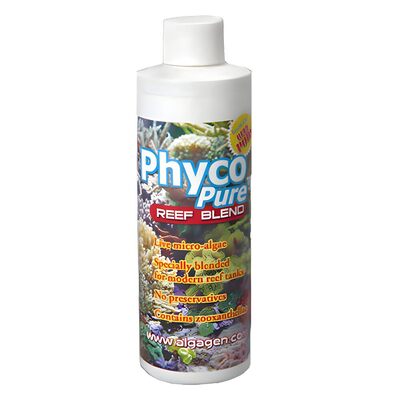
Once the tank has cycled and bacterial colonies are established, phytoplankton dosing should begin well before any fish or coral arrive. Phytoplankton sits at the base of the entire bioactive food web, feeding the copepods, amphipods, and filter feeders that will eventually populate the tank, while also helping absorb excess nutrients during this early stage. PhycoPure™ Reef Blend works well here, combining multiple phytoplankton strains into a single dose that gives an early-stage tank a genuinely diverse nutritional base rather than relying on a single algae species.
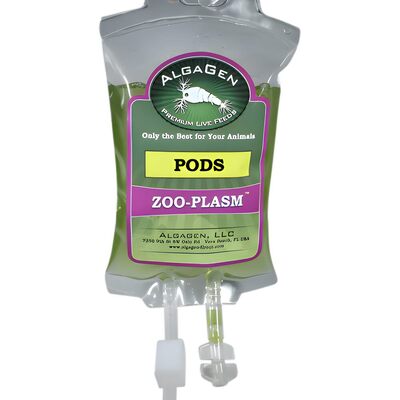
With a phytoplankton base establishing itself, copepod and amphipod seeding becomes the next layer. These microfauna populations do double duty in a bioactive system, consuming detritus and biofilm while also becoming a natural, ongoing food source for future fish and coral inhabitants. Seeding this population early, before any predatory fish are introduced, gives the copepods and amphipods time to establish a strong foothold in the rock and substrate without immediate predation pressure. Zoo-Plasm™ PODS works particularly well for this stage, since its Easy Feed Packaging makes it simple to distribute a live copepod population evenly across new rockwork and substrate during this critical early window.
Timing livestock introduction correctly is where a lot of the patience built into earlier stages either pays off or gets undermined. Adding fish too early, before copepod and amphipod populations have had several weeks to establish, means those populations face predation pressure before they have built any real numbers, often collapsing the very foundation you spent weeks establishing. Waiting until at least six to eight weeks after seeding gives these populations a genuine head start.
A refugium, if your system design allows for one, meaningfully accelerates and protects this entire process. Housing a portion of your copepod, amphipod, and macroalgae population in a separate, predator-free space lets that population continuously breed and migrate into the display tank without ever facing full predation pressure directly. Even a small refugium chamber in a sump makes a measurable difference in how resilient your bioactive populations remain once fish are introduced.
Nutrient export deserves planning from the earliest design stages rather than being treated as a problem to solve later. Macroalgae, protein skimming, and the bioactive population itself all contribute to nutrient export, but a new bioactive tank benefits from having at least one dedicated export mechanism running from the start, since the biological population alone typically cannot keep pace with bioload until it has fully matured over several months.
Testing and observation during the seeding stages tell you far more than a calendar timeline alone can. Rather than assuming a population is established simply because a certain number of weeks have passed, watch for actual signs of activity: copepods darting across the glass at night with a flashlight, amphipods visible in rockwork crevices, or a general sense of movement across the substrate. A tank showing strong visual signs of microfauna activity at week five is genuinely further along than a tank showing none at week eight, regardless of what a generic timeline suggests.
Sourcing quality matters as much as sequencing when it comes to seeding these populations successfully. A weak or contaminated starter culture can struggle to establish even under ideal tank conditions, while a healthy, diverse starter population gives the entire bioactive foundation a genuine head start. This is one area where cutting corners early tends to cost significantly more time later, since a failed seeding attempt often means starting the multi-week establishment process over again from scratch.
Patience is genuinely the defining requirement of a successful bioactive build. Every stage, from cycling through phytoplankton seeding to copepod establishment, needs real time to mature before the next layer gets added. Rushing this sequence, even with good intentions, tends to produce a tank that looks bioactive on paper but never actually develops the self-sustaining resilience the approach is meant to deliver.
Building a bioactive reef tank from scratch rewards a methodical approach far more than an ambitious one. Establish the physical foundation, seed the phytoplankton base, layer in copepods and amphipods, and only then begin introducing livestock, gradually and with restraint. Follow that sequence, and the resulting tank does not just look alive. It genuinely is, functioning as a real, interconnected ecosystem rather than a display case that happens to hold water.
Frequently Asked Questions
How long does it take to build a fully bioactive reef tank?
Most bioactive tanks need three to six months for the full foundation, including bacteria, phytoplankton, and microfauna populations, to mature before the system runs largely on its own.
Do I need a refugium for a bioactive reef tank?
Not strictly, but a refugium significantly protects and accelerates copepod and amphipod population growth by giving them a predator-free space to breed continuously.
When should I add my first fish to a new bioactive tank?
Wait at least six to eight weeks after seeding copepods and amphipods, giving those populations time to establish before facing predation pressure.
Can I still add a protein skimmer to a bioactive system?
Yes. A protein skimmer or other nutrient export method complements a bioactive population rather than competing with it, especially during the early months while populations mature.
Related Reading
Copepods for Refugium Setup Guide
How to Build a Self-Sustaining Aquarium System
The Role of Beneficial Bacteria in Aquariums


Recent post