
Anyone researching rotifers for the first time runs into the same fork in the road almost immediately. Do you start with live rotifers, ready to use the moment they arrive, or do you start with resting eggs, sometimes called cysts, that need to be hatched before they become useful? The two options solve different problems, and picking the wrong one for your situation usually means either wasted time or a feeding gap you did not plan for.
Live rotifers are exactly what the name suggests. A culture of actively swimming, reproducing rotifers arrives ready to feed directly to fish larvae, corals, or filter feeders, or to be added to an established culture to boost population numbers. There is no waiting period, no hatching setup, and no risk of a failed hatch. What you receive is what you use, immediately.
Rotifer eggs work fundamentally differently. Certain rotifer species can produce resting eggs, also called cysts, as a survival mechanism, allowing the population to endure conditions like drying out or extreme temperature shifts. These cysts can be stored, often frozen, for extended periods before use, and when conditions improve, they hatch and begin a new population from scratch, typically within 24 to 72 hours under the right light and temperature conditions.
| Factor | Live Rotifers | Rotifer Eggs (Cysts) |
|---|---|---|
| Time to first feeding | Immediate | 24 to 72 hours after hatching |
| Shelf life | About one month, refrigerated | Over a year, frozen |
| Setup required | None, ready to use | Hatching vessel, light, temperature control |
| Best for | Hobbyists, immediate feeding needs | Breeders needing long-term backup stock |
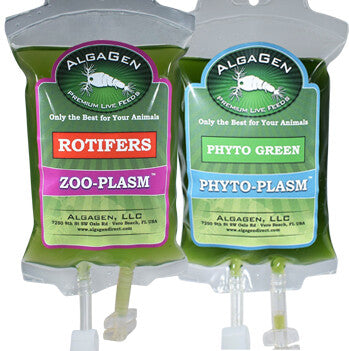
For most home aquarium keepers, live rotifers are the more practical choice, and it comes down to what you are actually trying to accomplish. If you are feeding fry, seahorses, mandarins, or filter feeders on an ongoing basis, you need a consistent, reliable supply that does not require managing a separate hatching operation on top of your existing tank maintenance. Rotifer Starter Combo gives you exactly that, a ready-to-use live rotifer culture paired with the phytoplankton needed to keep that culture fed and productive from day one.
Rotifer eggs earn their place in a different scenario entirely, usually among commercial breeders or serious hobbyists running larger operations who need a reliable backup in case an active culture crashes. A crashed rotifer culture can happen fast, sometimes overnight, from a contamination event, a sudden temperature swing, or an oxygen crisis in a dense culture. Having resting eggs on hand means a crash does not mean starting completely from zero, since a new culture can be hatched and growing again within a few days rather than needing to source an entirely new live culture.
The tradeoff with eggs is real, though, and worth being honest about. Hatching cysts requires a dedicated setup, typically a small vessel with controlled lighting and temperature, and the process takes real time and attention before you have anything usable. For someone simply trying to keep fry fed on a Tuesday, that lag is a problem. For someone managing a breeding operation with the infrastructure and schedule flexibility to manage a hatch cycle, it is a reasonable tradeoff for the extended shelf life and storage flexibility cysts offer.
Gut loading matters regardless of which option you choose, and this is a step people sometimes skip when focused on the live-versus-eggs decision. Rotifers hold onto whatever nutrition they last consumed for roughly four hours, which means their nutritional value to whatever eats them depends heavily on what they themselves were fed beforehand. A rotifer culture, whether started live or from hatched eggs, needs a consistent phytoplankton feeding schedule to actually deliver the nutritional benefit you are adding them to your tank for in the first place.
Most home aquarium situations resolve this decision fairly cleanly once you look honestly at your actual setup. If you need rotifers now, for an established or ongoing feeding need, live cultures remove the guesswork and the waiting period entirely. If you are running a dedicated breeding program with the infrastructure to manage hatching cycles and want insurance against a culture crash, resting eggs are worth the additional setup. Most hobbyists fall into the first category, which is exactly why ready-to-use live rotifer products dominate the retail side of this market.
Species selection adds another layer to this decision that is easy to overlook when first comparing live cultures to eggs. Not every rotifer species produces resting eggs reliably, and the strains commercially available as cysts are often selected specifically for that trait rather than for the same growth characteristics prioritized in live culture strains. This means the live rotifer you receive and the rotifer that eventually hatches from a cyst product are not always functionally identical, even when they belong to the same broad species designation.
Cost is worth factoring in honestly as well, since the two options are not priced or consumed the same way. Live cultures are typically sold in volumes meant for fairly immediate use, with the understanding that you will either consume them as feed or use them to seed an ongoing culture that sustains itself. Cyst products, by contrast, are often priced around their long shelf life and the number of hatches a single pouch can support, which can make them more cost-effective per feeding for someone hatching in bulk on a predictable schedule, but less practical for someone who just wants to feed a handful of fry this week.
There is no universally correct answer between live rotifers and rotifer eggs, only the answer that fits your specific situation. Match the option to your actual feeding timeline, your available setup, and how much backup redundancy your operation genuinely needs, and the decision becomes far more straightforward than it first appears.
Frequently Asked Questions
Which option is better for a beginner aquarium keeper?
Live rotifers are almost always the better starting point, since they require no hatching setup and can be used to feed immediately upon arrival.
How long do rotifer eggs take to hatch?
Most rotifer cysts hatch within 24 to 72 hours under proper light and temperature conditions, though timing varies by species and strain.
How long can I store live rotifers before using them?
Live rotifer cultures typically last about one month when properly refrigerated and maintained, compared to over a year for stored cysts.
Do I need to feed rotifers before feeding them to fish?
Yes. Gut loading rotifers with phytoplankton before feeding significantly increases their nutritional value, since they only retain nutrition for a few hours after eating.
Related Reading
Complete Guide to Rotifer Culture Kits
Discover What Are Rotifers
Zooplankton vs Phytoplankton: Reef Food Explained


Recent post